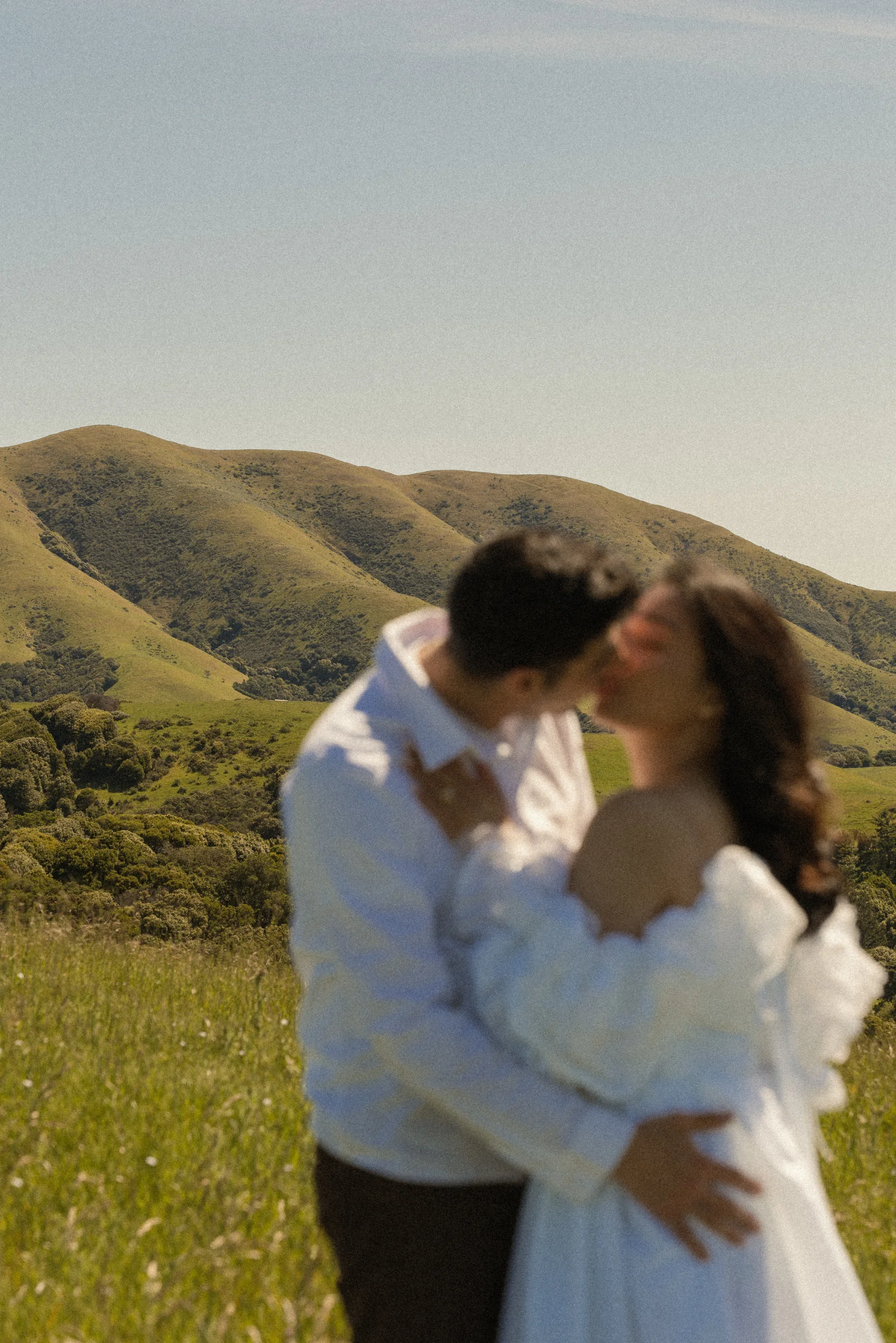
An elopement used to mean two people slipping away in secret. It rarely means that now. Today it is a small, intentional wedding day built around the two of you, sometimes just the two of you, sometimes a dozen of the people you love most. This guide walks through how to plan one in California without losing the ease that made you want to elope in the first place.
Northern California couples come to this for a handful of reasons. They want a day that feels like them rather than a schedule. They would rather spend the budget on a place they will remember than a room they will rent. And the landscape here rewards it. Within a few hours of Sacramento you can stand on a granite dome, a fog-lined beach, or a hillside of vines, and that range is a large part of why eloping fits this part of the state so well.
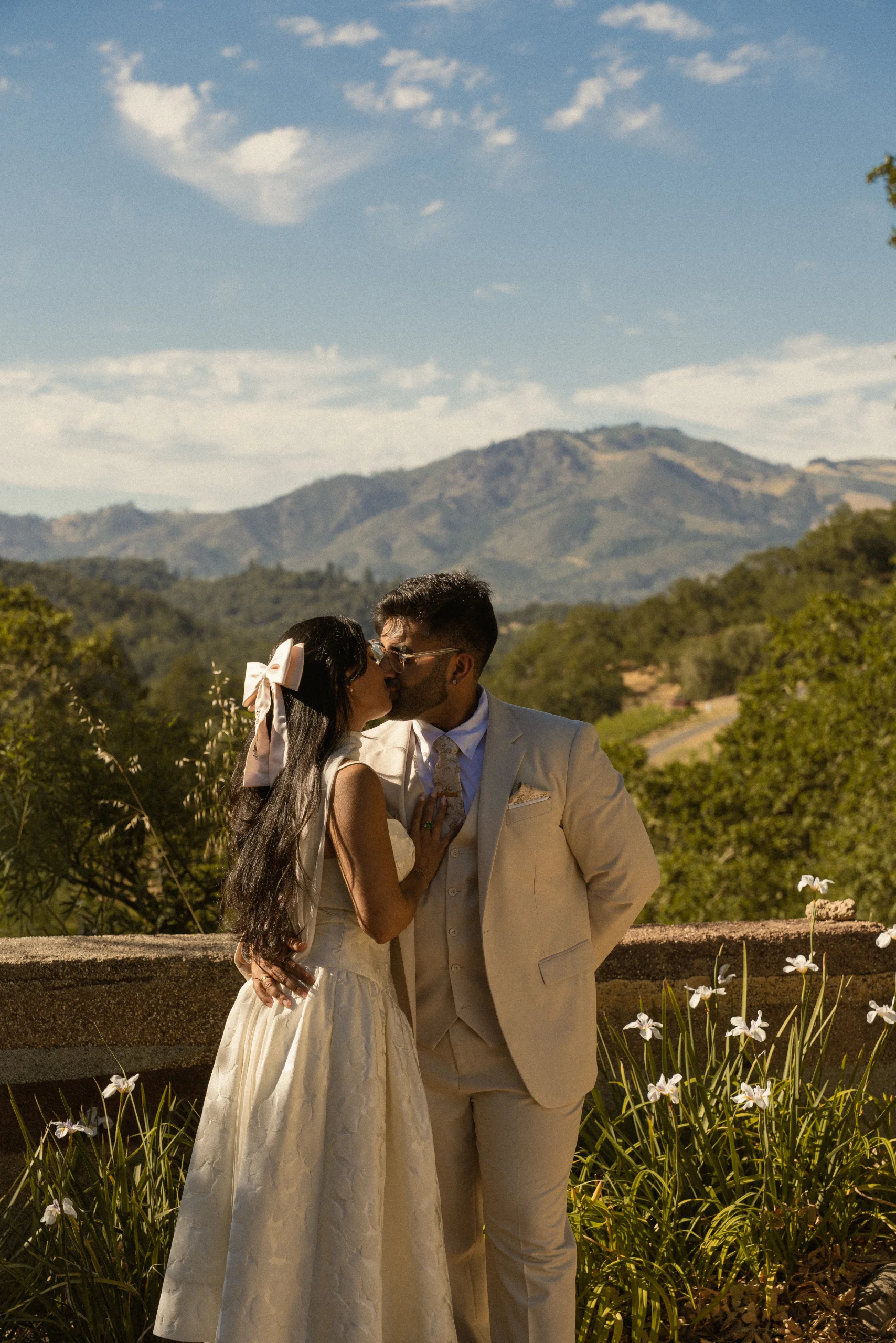
The California marriage license
The legal part is simpler than it looks, and it is the same across the state even though each county runs its own office. You apply for a marriage license in person through a county clerk, and here is the useful detail: it does not have to be the county where you marry. A license issued in any California county is valid anywhere in California, so you can handle the paperwork near home and marry three hours away in the mountains.
Once issued, a California license is valid for ninety days, and there is no waiting period, so you can marry the same day you pick it up. You will need a person licensed to solemnize the marriage, an officiant, and for a standard public license you also need one witness who can sign the certificate. Bring valid photo identification for both of you.
There is a second option worth knowing about. California offers a confidential marriage license, and for an elopement it can be a quiet fit. It requires no witness and the record is not open to the public, though the couple must be living together at the time they apply. It is a genuine California law, not a workaround, and many couples eloping as a pair choose it precisely because it needs no one else present.
Fees, accepted forms of payment, and whether you need an appointment vary from county to county and do change. Confirm the current specifics with your county clerk before you plan a date around them.
Choosing a location type
Where you elope shapes everything else about the day. It is worth choosing the type of landscape first, then the exact spot, because each one asks something different of you.
-
I.The coast
Fog, wind, and long open horizons. Places like Point Reyes National Seashore or the Big Sur coast give you drama for very little effort, but the weather writes its own plans. Coastal fog can sit until late morning and roll back in by evening, so build in patience and a warm layer.
Bring a windbreak, expect fog -
II.The Sierra
Granite, alpine lakes, and high meadows. Yosemite and the Lake Tahoe basin are the headliners, and both are worth the drive. Altitude and season matter here more than anywhere: many high spots hold snow into June, and afternoon storms build fast in summer. This is also the country where permits come into play, more on that below.
Watch season and altitude -
III.Wine country
Sonoma and Napa give you rolling vineyard light and a softer, warmer kind of day. It suits couples who want good food and a short walk rather than a hike. Private estates and wineries usually have their own booking process, so the venue, not a public agency, sets the rules.
Book the estate directly -
IV.The city
San Francisco and Sacramento both make a strong urban elopement, from the steps of a historic building to a rooftop at dusk. A city day asks the least of the weather and the most of your timing, since you are working around light between buildings and the rhythm of other people using the same space.
Time it around the crowds
If a mountain day is pulling at you, it is worth reading the location-specific guides before you commit, since each place has its own quirks: a Yosemite elopement lives and dies by season and permits, while a Lake Tahoe elopement gives you both alpine granite and open water in a single afternoon.
Building the day around light, not the clock
The single change that makes an elopement feel unhurried is planning it around the sun rather than a start time. A ceremony at two in the afternoon on a coastal bluff or a granite overlook fights flat, hard light. The same vows at sunrise or in the last hour before sunset feel like a different day entirely.
In practice that means we look at where the sun rises and sets over your chosen spot and work backward from there. Many of the best elopements here start before dawn, hike in, and marry as the first light hits, then come down for breakfast. Others save it all for the golden window at the end of the day. Either way the light leads and the timeline follows, which is the opposite of how a large wedding usually runs.
Season folds into this too. A Sierra meadow that is under snow in April is wildflowers in July. A coastal point that is socked in with fog all summer clears into some of the best light of the year in September and October. Choosing the month is part of choosing the light.
A note on permits
Public land is not automatically free to use for a ceremony. Most national parks, including Yosemite, require a wedding or special-use permit for a ceremony even with a small group, and popular spots have limited capacity and set locations. State parks and some regional lands have their own rules and their own fees. These policies and costs change from year to year, so treat any figure you read online as a starting point and confirm with the managing agency. There is a fuller reference on California elopement permits that covers who to ask and when.
What a photographer covers on an elopement
This is where an elopement and a wedding part ways most. At a wedding, a photographer documents a day that other people have largely planned: the venue, the timeline, the vendors. At an elopement, especially a two-person one, there is often no planner, no coordinator, and no one else in the room, so the role widens.
On the elopements I photograph, that usually means helping scout the location and the light long before the date, sharing a timeline built around sunrise or sunset, and flagging the permit and access questions early so nothing derails the morning. On the day, it can mean carrying a bag up a trail, keeping an eye on the weather window, and quite often being the witness who signs your license. You are not managing a crew. You are moving through a landscape with one person who has done it before.
That breadth is the whole idea behind how I approach elopements, and it is worth being clear that costs live on the pricing page rather than here, since every day is scoped differently. If you have a place and a rough season in mind, the next step is simply to tell me about your date and we will start mapping the light around it.